
Butter vs Olive Oil vs Seed Oils: Which Is Best for Cooking?
Butter, extra virgin olive oil and seed oils all have a place in the kitchen. However, they differ considerably in flavour, processing, fatty-acid composition and suitability for different cooking methods.
So, which cooking fat is best?
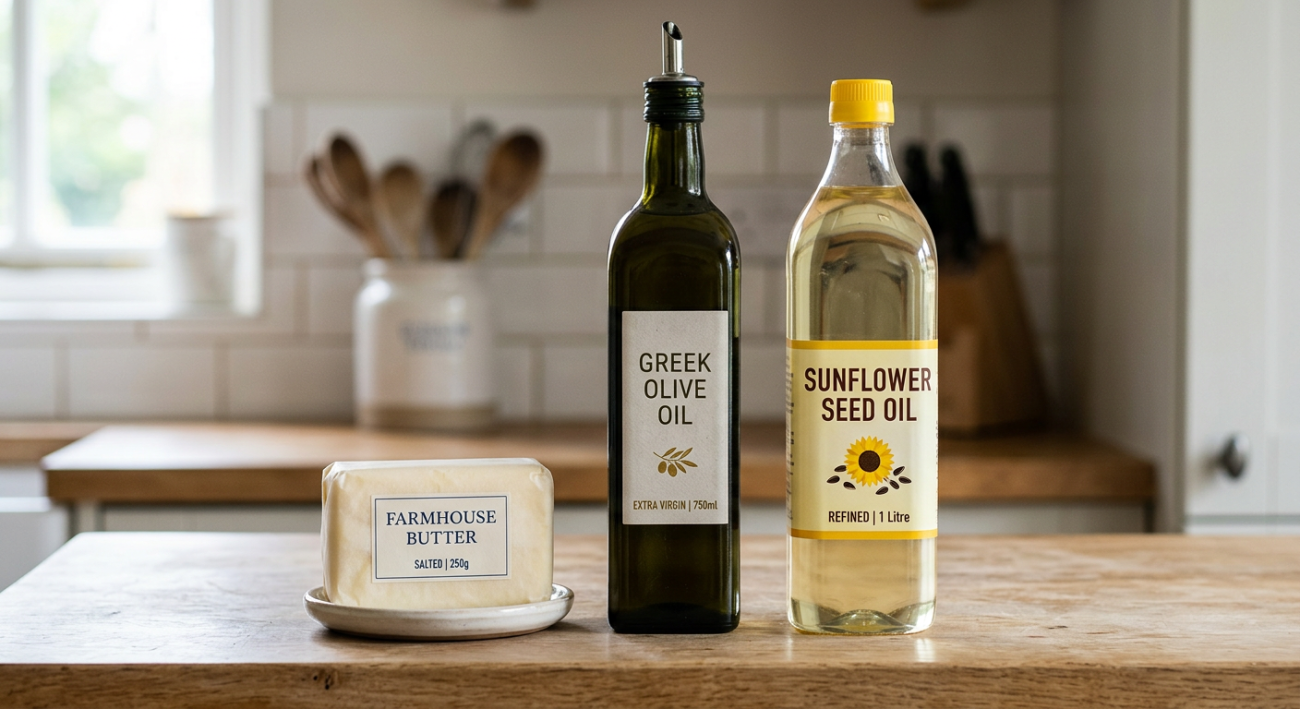
There is no universal winner for every recipe. For most home kitchens, extra virgin olive oil is one of the most versatile everyday choices, especially for sautéing, roasting, marinades, dressings and Mediterranean-style cooking. Butter is particularly useful when its characteristic flavour and texture are essential, while refined seed oils can be practical when a neutral flavour or specific cooking performance is required.
The right choice depends on what you are cooking, the flavour you want and how the fat fits into your overall diet.
Quick Comparison: Butter vs Olive Oil vs Seed Oils
| Cooking fat | Main flavour | Fat profile | Common uses |
| Extra virgin olive oil | Fruity, grassy, bitter or peppery | Mostly monounsaturated fat | Sautéing, roasting, sauces, marinades, dressings and finishing |
| Butter | Rich, creamy and slightly sweet | Higher in saturated fat | Baking, pan sauces, pastries, eggs and recipes requiring buttery flavour |
| Refined seed oils | Usually mild or neutral | Mostly unsaturated, but varies by oil | Frying, baking and recipes where a neutral flavour is preferred |
The term seed oils describes a broad category that includes sunflower, rapeseed or canola, soybean, corn, safflower and grapeseed oil. These oils do not all have the same composition or cooking properties and should not be treated as if they were one identical ingredient.
Extra Virgin Olive Oil
Extra virgin olive oil is produced directly from olives using mechanical processes, without the refining required for many neutral cooking oils.
Its flavour can vary significantly according to:
- Olive variety
- Harvest time
- Growing region
- Extraction conditions
- Filtration
- Storage
- Freshness
A quality extra virgin olive oil may taste fruity, grassy, herbal, bitter or peppery. These characteristics can add flavour rather than simply providing fat for cooking.
Can You Cook with Extra Virgin Olive Oil?
Yes. The belief that extra virgin olive oil should only be used raw is an oversimplification.
The International Olive Council describes virgin olive oil as suitable for culinary use, while extra virgin olive oil is widely used throughout Mediterranean cooking for both raw and cooked dishes.
Extra virgin olive oil can be used for:
- Sautéing vegetables
- Cooking eggs
- Preparing tomato sauces
- Roasting vegetables and potatoes
- Cooking fish, chicken and meat
- Baking
- Shallow frying
- Marinades and salad dressings
- Finishing soups, legumes and grilled food
As with any cooking oil, it should not be left unattended or repeatedly heated until it smokes.
What About the Smoke Point?
Smoke point is the temperature at which visible smoke begins to appear. It is useful information, but it does not provide a complete measurement of an oil’s performance during cooking.
Oil stability is also affected by:
- Fatty-acid composition
- Antioxidant content
- Freshness
- Refinement
- Cooking temperature
- Heating duration
- Exposure to oxygen
- Repeated heating and reuse
Scientific reviews have concluded that smoke point alone is not a precise indicator of how quickly an oil will degrade during frying. The composition of the oil and the conditions under which it is used also matter.
For normal home cooking, fresh extra virgin olive oil can be used for a wide variety of methods. If the oil begins to smoke heavily, the pan is too hot and the temperature should be reduced.
Butter
Butter is made from milk fat and contains small amounts of water and milk solids. These components give butter its characteristic taste, texture and browning behaviour.
Butter is particularly useful for:
- Cakes, biscuits and pastries
- Pan sauces
- Scrambled eggs and omelettes
- Toasting bread
- Finishing vegetables
- Recipes where buttery flavour is essential
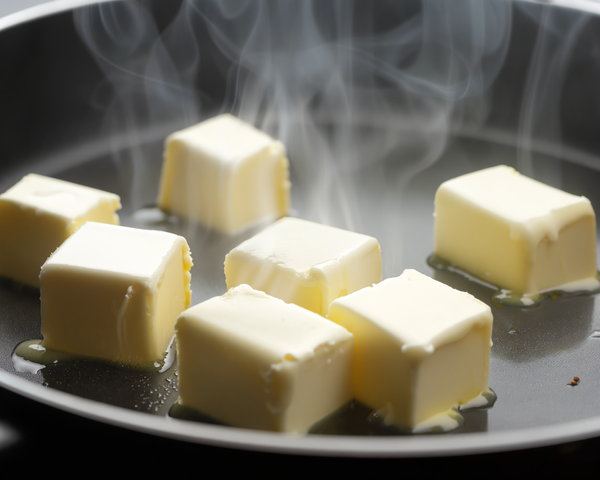
When butter is heated, its milk solids begin to brown. This can create a pleasant nutty flavour, known as brown butter, but the solids can also burn when exposed to excessive heat.
Clarified butter and ghee have most of the water and milk solids removed, making them more suitable for cooking at higher temperatures than standard butter.
Butter and Saturated Fat
Butter contains a higher proportion of saturated fat than olive oil and most liquid seed oils.
The World Health Organization recommends that dietary fats come primarily from unsaturated fatty acids and that saturated fat account for no more than 10% of total energy intake. It also recommends replacing some saturated fat with monounsaturated or polyunsaturated fat where appropriate.
This does not mean butter must be completely avoided. It means that frequency, quantity and the overall dietary pattern are more important than labelling one individual ingredient as either “good” or “bad.”
Butter can be used when its flavour or technical function benefits a recipe, while olive oil or another unsaturated plant oil may be a more practical everyday cooking fat.
Seed Oils
“Seed oil” is not a single product. It is a general term used for oils extracted from different seeds.
Common examples include:
- Sunflower oil
- Rapeseed or canola oil
- Soybean oil
- Corn oil
- Safflower oil
- Grapeseed oil
- Sesame oil
Their properties vary according to the seed, fatty-acid composition, extraction method, refinement and whether the oil is a traditional or high-oleic variety.
Are All Seed Oils the Same?
No.
For example, standard sunflower oil and high-oleic sunflower oil can have substantially different fatty-acid profiles. Sesame oil has a strong, distinctive flavour, while refined canola or sunflower oil is generally much more neutral.
Some refined seed oils are commonly selected for frying because they have:
- A neutral flavour
- Consistent cooking performance
- Broad availability
- A relatively high smoke point
- A lower cost than premium extra virgin olive oil
However, an oil’s behaviour also changes with prolonged or repeated heating. No cooking oil should be repeatedly overheated without monitoring its condition.
Are Seed Oils “Toxic”?
Claims that all seed oils are inherently toxic or inflammatory treat a diverse group of foods as though they were identical.
Current public-health guidance does not support classifying every seed oil as a harmful ingredient. The World Health Organization includes oils rich in unsaturated fats—such as rapeseed, sunflower, soybean and corn oil—among the possible replacements for fats that are higher in saturated fat.
This does not mean every seed oil is automatically the best choice for every recipe. Quality, freshness, processing, cooking method, frequency of use and the complete dietary pattern still matter.
It is also important to distinguish ordinary home cooking from heavily processed foods. A packaged snack containing refined oil, salt, refined carbohydrates and other ingredients cannot be evaluated solely by the type of oil it contains.
Which Fat Has the Best Nutritional Profile?
All cooking fats are energy-dense. The most important nutritional difference is generally the type of fatty acids they contain rather than a major difference in calories.
Extra Virgin Olive Oil
Extra virgin olive oil contains predominantly monounsaturated fat, especially oleic acid. It also contains naturally occurring minor compounds whose concentration varies according to olive variety, harvest, processing and storage.
Butter
Butter contains a larger proportion of saturated fat. It also contains dairy-derived compounds and provides specific culinary properties that liquid oils cannot always reproduce in baking.
Seed Oils
Most common liquid seed oils contain predominantly unsaturated fats. The balance between monounsaturated and polyunsaturated fat differs considerably between varieties.
Nutrient values should always be checked against the label of the individual product rather than assumed from the broad category to which it belongs. Official food-composition databases, including USDA FoodData Central, also document the nutritional differences between individual fats and oils.
Which Cooking Fat Should You Choose?
The best choice depends on the dish.
For Everyday Sautéing
Extra virgin olive oil is an excellent option for vegetables, eggs, legumes, sauces, fish and meat. It contributes both cooking performance and flavour.
For Roasting
Extra virgin olive oil works well with potatoes, vegetables, chicken and fish. Its flavour complements herbs, garlic, lemon and other Mediterranean ingredients.
For Salad Dressings and Finishing
Extra virgin olive oil is usually the most flavourful option because it can be enjoyed without prolonged heating. This allows its aroma, bitterness and peppery character to remain noticeable.
For Baking
The choice depends on the recipe.
Butter is often preferred in pastries and biscuits where its solid texture and flavour are part of the intended result. Olive oil can work particularly well in cakes, bread and Mediterranean baking, but it may change the texture and flavour.
Neutral seed oils can be useful in recipes where additional flavour is not desired.
For Frying
Extra virgin olive oil, refined olive oil and suitable refined seed oils can all be used for frying.
The practical choice may depend on:
- Desired flavour
- Frying temperature
- Duration
- Whether the oil will be reused
- Product quality
- Cost
Avoid allowing any oil to smoke heavily. Oil that smells rancid, has become unusually thick, foams excessively or produces unpleasant flavours should be discarded.
For Buttery Flavour
Use butter when its flavour is an important part of the recipe. It can also be combined with olive oil for flavour balance, although adding olive oil does not prevent the milk solids in butter from browning or burning.
Four Common Cooking-Fat Myths
Myth 1: You Cannot Heat Extra Virgin Olive Oil
Extra virgin olive oil can be used for normal home cooking, including sautéing, roasting and frying. Heat can reduce some aromatic and minor compounds, but this does not mean the oil immediately becomes unsuitable or toxic.
Myth 2: A High Smoke Point Automatically Means a Better Oil
Smoke point is only one factor. Oxidative stability, freshness, composition, heating duration and repeated use must also be considered.
Myth 3: All Seed Oils Are Identical
Different seed oils have different fatty-acid profiles, flavours and processing methods. Even two versions of sunflower oil may perform differently if one is high in oleic acid.
Myth 4: “Natural” Automatically Means Healthier
How natural or traditional an ingredient sounds does not determine its complete nutritional profile. Butter, olive oil and minimally processed oils can all be traditional foods, but their fatty-acid compositions remain different.
Our Practical Conclusion
There is no single cooking fat that is perfect for every dish.
For most households, extra virgin olive oil is a versatile everyday choice because it can be used in cold dishes, sauces, sautéing, roasting, baking and frying while also contributing its own flavour.
Butter remains useful when a recipe requires buttery taste, browning or a particular baking texture. Refined seed oils can also be practical when neutral flavour, affordability or specific frying performance is needed.
Instead of dividing cooking fats into “good” and “bad,” consider:
- The cooking method
- The flavour of the dish
- The quality and freshness of the product
- The amount used
- How often the fat is consumed
- The overall composition of your diet
No single ingredient determines the healthfulness of an entire diet.
Frequently Asked Questions
Is extra virgin olive oil safe for frying?
Extra virgin olive oil can be used for frying and other normal cooking methods. Avoid repeatedly overheating it or allowing it to smoke heavily.
Is olive oil better than butter for everyday cooking?
For frequent everyday use, olive oil provides more unsaturated and less saturated fat than butter. Butter may still be preferred in recipes where its flavour or baking properties are important.
Are seed oils unhealthy?
Seed oils are a diverse category and cannot accurately be evaluated as one identical ingredient. Their composition, processing and cooking performance vary. Current dietary guidance generally favours unsaturated plant oils over fats that are high in saturated fat.
Which cooking fat is best for high heat?
This depends on the temperature, duration and cooking method. Fresh extra virgin olive oil is suitable for many home-cooking applications. Refined olive oil and certain refined or high-oleic seed oils may also be practical when neutral flavour or prolonged high-temperature use is required.
Does cooking destroy the benefits of extra virgin olive oil?
Heating may reduce some aromas and naturally occurring minor compounds, especially with prolonged exposure. However, olive oil remains predominantly monounsaturated fat. Using some extra virgin olive oil raw or as a finishing oil is a good way to appreciate its complete flavour.
Which cooking fat contains the fewest calories?
Butter and cooking oils are all energy-dense. Differences per serving are usually much smaller than the effect of the quantity used.
Discover Greek Extra Virgin Olive Oil
Extra virgin olive oil is more than a neutral cooking ingredient. Variety, origin, harvesting and production influence its aroma, flavour and culinary character.
Explore Olive’s Life extra virgin olive oils and choose the flavour profile that best suits your cooking—from fresh salads and dressings to roasted vegetables, sauces and traditional Mediterranean recipes.
Sources and Further Reading
- World Health Organization: Saturated Fatty Acid and Trans-Fatty Acid Intake for Adults and Children
- World Health Organization: Healthy Diet
- European Food Safety Authority: Dietary Reference Values for Fats
- International Olive Council: Olive Oils and Their Culinary Uses
- USDA FoodData Central
- Vegetable Oils and Their Use for Frying: A Review of Their Compositional Differences and Degradation
Editorial note: This article provides general information about food and cooking. It is not intended as individual medical or dietary advice. People with specific health conditions or dietary requirements should consult an appropriately qualified healthcare professional.


